

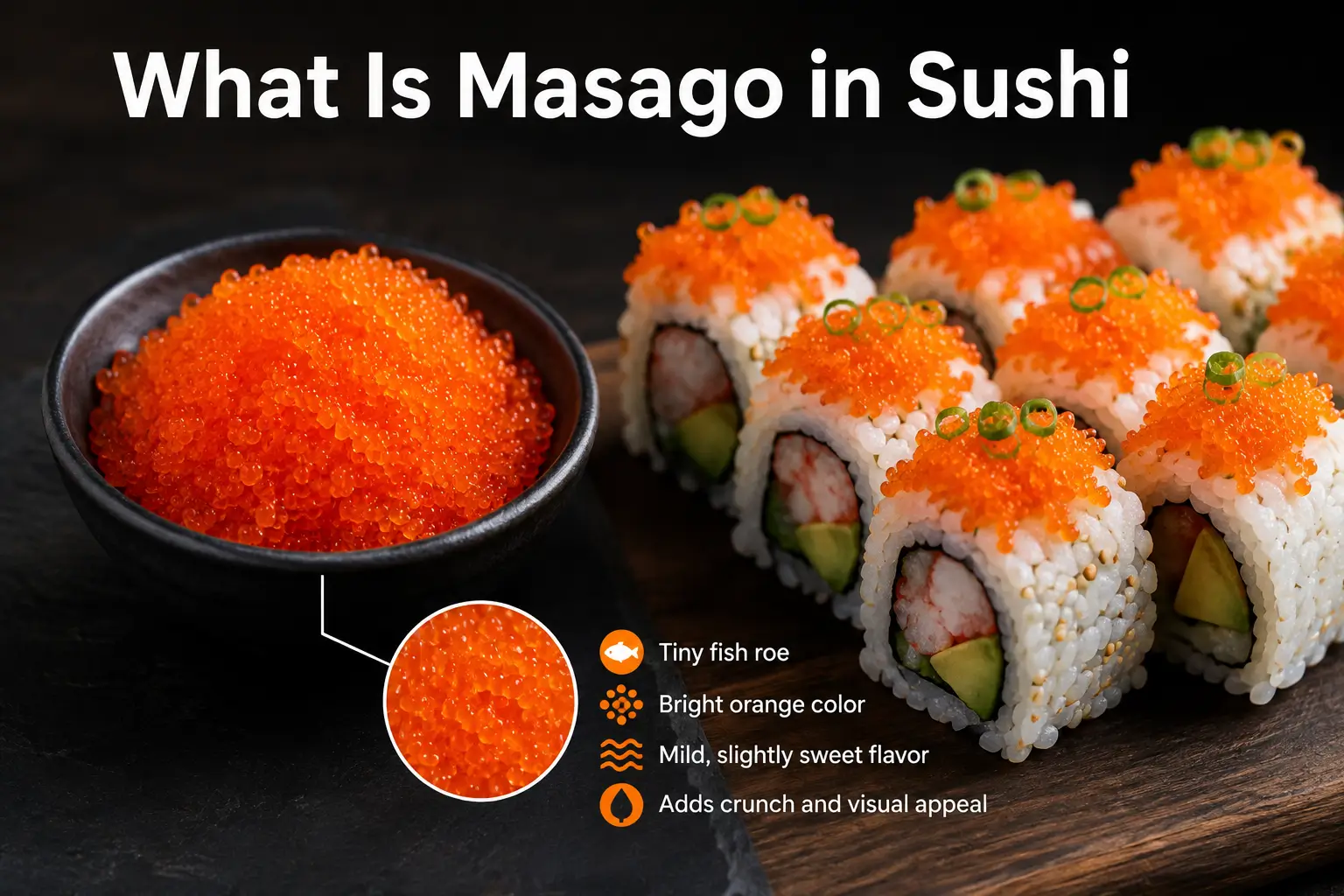
If you have ever ordered a sushi roll topped with tiny, colorful eggs, you may have wondered what exactly you were eating. Many people ask the same question after their first bite: what is masago in sushi?
This tiny ingredient often goes unnoticed on the menu, yet it plays a surprisingly important role in many favorite sushi rolls. From its texture to its bright color, masago adds a unique element that many diners enjoy without fully understanding what it actually is.
Masago is a common ingredient found in sushi restaurants across the USA. It adds color, texture, and a mild flavor to many popular rolls. Despite being so common, many people still confuse it with similar ingredients like tobiko or caviar.
In this guide, we will explain everything about masago. We will cover where it comes from, what it tastes like, why its color changes, and how it compares to other types of fish roe. We will also look at its nutritional value, health considerations, and answer common questions people search for online.
At VipThoughts, we enjoy breaking down food topics in a simple, easy-to-understand way. This guide is written for curious sushi lovers who want clear, accurate answers without confusing food jargon.
What Is Masago in Sushi?
Masago in sushi refers to small, edible fish eggs used as a topping or filling in various sushi dishes. These tiny eggs are known for their bright color, subtle crunch, and mild flavor.
You will often find masago sprinkled on top of sushi rolls, mixed into spicy mayo-based rolls, or used as a garnish on sashimi plates. Its small size and vibrant appearance make it a popular choice for adding visual appeal to sushi dishes.
While it may look similar to caviar or other fish roe, masago has its own distinct characteristics. Understanding these differences helps sushi lovers appreciate exactly what they are eating.
For many diners, masago is one of the first sushi ingredients they encounter without realizing it. It quietly appears in some of the most popular rolls served at sushi restaurants, adding a familiar pop of texture that many people enjoy long before learning its actual name.
Where Does Masago Come From?
Masago in Sushi comes from the roe, or eggs, of the capelin fish. Capelin is a small, cold-water fish commonly found in the North Atlantic and Pacific Oceans. These fish are known for producing large quantities of tiny eggs, making them a practical source for sushi ingredients.
The eggs are harvested, cleaned, and lightly processed before being used in sushi preparations. This process helps preserve their texture and flavor while making them safe and ready to eat.
Because capelin is widely available in cold ocean waters, masago has become a popular and relatively affordable ingredient across sushi restaurants worldwide, including throughout the United States.
Capelin fish typically reproduce in large numbers, which helps keep the supply of masago steady and accessible. This abundance is part of why masago remains a budget-friendly option compared to rarer types of fish roe used in more premium dishes.
What Does Masago Taste Like?
One of the most common questions people ask is about the flavor of masago. Understanding its taste helps set the right expectations before trying it for the first time.
Masago has a mild, slightly salty and briny flavor. It carries a subtle sweetness that balances out its saltiness, making it enjoyable without being overwhelming. Unlike some strong-tasting seafood, masago does not have an overpowering fishy flavor.
Texture also plays a big role in the masago experience. The tiny eggs have a light, delicate pop when bitten into, adding a fun textural contrast to soft sushi rolls or rice. This combination of mild flavor and unique texture is part of why masago remains such a popular sushi topping.
For first-time sushi eaters, masago is often described as an easy ingredient to enjoy, since it does not carry the intense ocean flavor that some other seafood options have. This makes it a great starting point for anyone hesitant about trying fish roe for the first time.
What Color Is Masago and Why?
Color is one of the most noticeable features of masago, and it often raises questions among sushi lovers.
Natural Masago Color
In its natural form, masago is typically a pale yellow or tan color. This subtle, muted tone reflects the natural pigmentation of capelin roe before any additional processing.
Why Masago Is Often Dyed
Many sushi restaurants dye masago to create more vibrant colors, such as orange, red, green, or black. This is done purely for visual appeal, since colorful toppings make sushi rolls look more attractive on the plate.
The dyeing process typically does not significantly change the flavor of masago. Instead, it enhances presentation, making dishes look more appealing to customers. Different colors are sometimes used to distinguish between different roll varieties or flavor combinations within a restaurant’s menu.
Food-safe dyes are generally used in this process, following standard food safety regulations. While color can vary from bright orange to deep red or even black, the underlying eggs remain the same in terms of nutritional value and basic flavor profile.
Masago vs Tobiko: What’s the Difference?
One of the most common points of confusion is the difference between masago and tobiko. While they may look similar at first glance, these two ingredients come from different fish and have distinct characteristics.
- Masago comes from capelin fish and has smaller, softer eggs
- Tobiko comes from flying fish and has larger, crunchier eggs
- Masago is generally more affordable than tobiko
- Tobiko often has a more pronounced crunch and slightly stronger flavor
Because of their similar appearance, some restaurants may substitute masago for tobiko, especially in dishes where cost matters. However, true sushi enthusiasts often notice the difference in texture and egg size between the two.
Price is often the biggest factor behind this substitution. Since tobiko generally costs more due to the flying fish’s smaller yield, masago provides a similar visual effect at a more accessible price point. This makes it a practical choice for restaurants aiming to keep menu prices reasonable without sacrificing presentation.
Masago vs Caviar: Key Differences
Another common comparison is between masago and traditional caviar. While both are types of fish roe, they differ significantly in origin, price, and overall culinary use.
- Caviar typically comes from sturgeon fish
- Masago comes from capelin fish
- Caviar is generally much more expensive than masago
- Masago is more commonly used in casual sushi dishes
- Caviar is often associated with fine dining and luxury cuisine
Understanding this distinction helps clarify why masago is widely available and commonly used in everyday sushi rolls, while caviar remains a more exclusive, premium ingredient.
The harvesting process also differs significantly between the two. Sturgeon, the source of traditional caviar, takes many years to mature and produce eggs, contributing to its high price. Capelin, on the other hand, matures much faster and produces eggs more frequently, making masago far more accessible for everyday sushi dining.
Nutritional Value of Masago
Beyond taste and appearance, many people are curious about the nutritional benefits of masago. As a type of fish roe, it offers several valuable nutrients.
Protein and Omega-3 Content
Masago is a good source of protein, which supports muscle repair and overall body function. It also contains omega-3 fatty acids, which are known for supporting heart and brain health.
These nutrients make masago a nutritious addition to sushi dishes, especially for people looking to increase their intake of healthy fats and protein through seafood.
Calories and Other Nutrients
Masago is relatively low in calories compared to many other sushi toppings. It also contains small amounts of vitamins and minerals, including vitamin B12 and selenium, both of which support various bodily functions.
While masago is not typically eaten in large quantities, its nutrient density makes even small servings a meaningful addition to a balanced diet.
Compared to many fried or heavily sauced sushi toppings, masago offers a lighter option that still contributes real nutritional value. This makes it appealing for people who want to enjoy flavorful sushi while staying mindful of overall calorie intake.
Health Benefits of Eating Masago
Including masago in your diet, especially as part of sushi meals, can offer several potential health benefits.
- Supports heart health through omega-3 fatty acids
- Provides a good source of lean protein
- Contains essential vitamins like B12
- Low in calories compared to many other toppings
- Adds variety to seafood-based diets
These benefits make masago a reasonable addition to a balanced diet when eaten in moderation. As with any seafood, it is best enjoyed as part of a varied, well-rounded eating pattern.
Seafood in general is often recommended as part of a heart-healthy diet, and small portions of nutrient-dense options like masago can contribute to that goal without adding excessive calories. Pairing it with other whole foods in a sushi meal helps create a more balanced overall plate.
How Masago Is Used in Sushi Rolls
Masago plays a versatile role in sushi preparation. It can be used in several different ways depending on the dish.
Popular Sushi Rolls with Masago
Masago is commonly found in a variety of popular sushi rolls, including:
- California rolls
- Spicy tuna rolls
- Rainbow rolls
- Dynamite rolls
- Various specialty maki rolls
In these dishes, masago is often mixed into the filling or used to coat the outside of the roll, adding both flavor and visual appeal.
Restaurants often choose masago specifically for rolls where a light crunch and pop of color enhance the overall presentation without competing with the main flavors of the dish, such as spicy mayo, avocado, or cream cheese.
Masago as a Garnish
Beyond rolls, masago is frequently used as a simple garnish. It can be sprinkled on top of nigiri, sashimi platters, or rice bowls to add color and texture without overpowering the main ingredients.
This flexibility is one of the reasons masago remains such a popular choice across different types of sushi dishes.
Chefs also appreciate masago for its ability to add contrast. Its firm, popping texture stands out against the softness of rice and raw fish, creating a more dynamic eating experience with every bite. This textural balance is a key reason it appears so frequently across different sushi menu items.
Is Masago Safe to Eat? Things to Know
While masago is generally considered safe for most people, there are a few important points to keep in mind before eating it regularly.
Sodium Content Concerns
Masago in Sushi tends to be relatively high in sodium due to the curing process used during preparation. People who are monitoring their salt intake, such as those managing blood pressure concerns, should be mindful of portion sizes.
Who Should Be Cautious About Masago
Certain groups should approach masago with extra caution:
- Pregnant individuals should consult a doctor regarding seafood consumption guidelines
- People with shellfish or seafood allergies should avoid it
- Individuals on low-sodium diets should limit their intake
- Those with mercury sensitivity concerns should discuss seafood choices with a healthcare provider
As with any specialty food, moderation and awareness of personal health conditions are key to enjoying masago safely.
It is also worth checking with the restaurant or seafood supplier about sourcing and preparation methods, especially if you have specific dietary restrictions. Reputable sushi establishments typically follow strict food safety standards when handling and storing fish roe products like Masago in Sushi.
How to Store and Buy Masago
If you want to try preparing sushi at home, masago is available at many Asian grocery stores and seafood markets. It is typically sold frozen or refrigerated in small containers.
When storing Masago in Sushi, keep the following tips in mind:
- Store frozen masago in the freezer until ready to use
- Once thawed, keep it refrigerated and use within a few days
- Always check for proper sealing to maintain freshness
- Avoid leaving masago at room temperature for extended periods
Following these simple storage practices helps maintain both the flavor and safety of Masago in Sushi for home use.
If you plan to make sushi at home regularly, buying masago in smaller quantities can help ensure freshness, since it is best enjoyed soon after thawing rather than being stored for long periods after opening.
Frequently Asked Questions
What is Masago in Sushi made from?
Masago is made from the roe of the capelin fish. It is a small, cold-water fish found in northern oceans. The eggs are harvested and lightly processed for sushi use.
Is Masago in Sushi the same as tobiko?
No, they come from different fish. Tobiko comes from flying fish and has larger, crunchier eggs. Masago eggs are smaller and slightly softer in texture.
Why is masago orange in sushi?
Masago is naturally pale yellow or tan in color. Restaurants often dye it orange for visual appeal. The dye does not significantly affect its flavor.
Is masago healthy to eat?
Yes, it provides protein and omega-3 fatty acids. However, it is high in sodium, so it should be eaten in moderation.
Does Masago in Sushi taste fishy?
No, it has a mild, slightly salty and briny flavor rather than a strong fishy taste. It also has a subtle sweetness and light popping texture.
Final Thoughts on Masago in Sushi
Understanding what masago in sushi actually is helps make every sushi meal more enjoyable and informed. From its origin as capelin fish roe to its mild flavor and colorful appearance, masago plays a unique role in many popular sushi dishes.
While it is often confused with tobiko or caviar, masago has its own distinct characteristics that make it a beloved topping in sushi restaurants across the USA. Its nutritional benefits, combined with its unique texture, make it a small but meaningful addition to any sushi meal.
Learning about ingredients like masago also adds a deeper appreciation for the craft behind sushi preparation. Each small detail, from the type of roe used to the way it is dyed and presented, reflects the care that goes into creating an enjoyable dining experience.
Whether you are trying masago for the first time or simply looking to understand it better, this guide gives you the full picture of this popular sushi ingredient.
Next time you spot those small, colorful eggs on your sushi roll, you will know exactly what you are eating, where it comes from, and why it has become such a beloved part of sushi culture across the USA.
For more helpful food guides and ingredient breakdowns like this one, keep exploring VipThoughts. We are committed to bringing our readers simple, accurate, and easy-to-understand content about the foods they love.
[…] base of locro is usually white corn, squash, and beans. Meat is added for richness. Most recipes include a mix of beef, pork, chorizo, and sometimes bacon. The result is a thick, orange-colored […]