

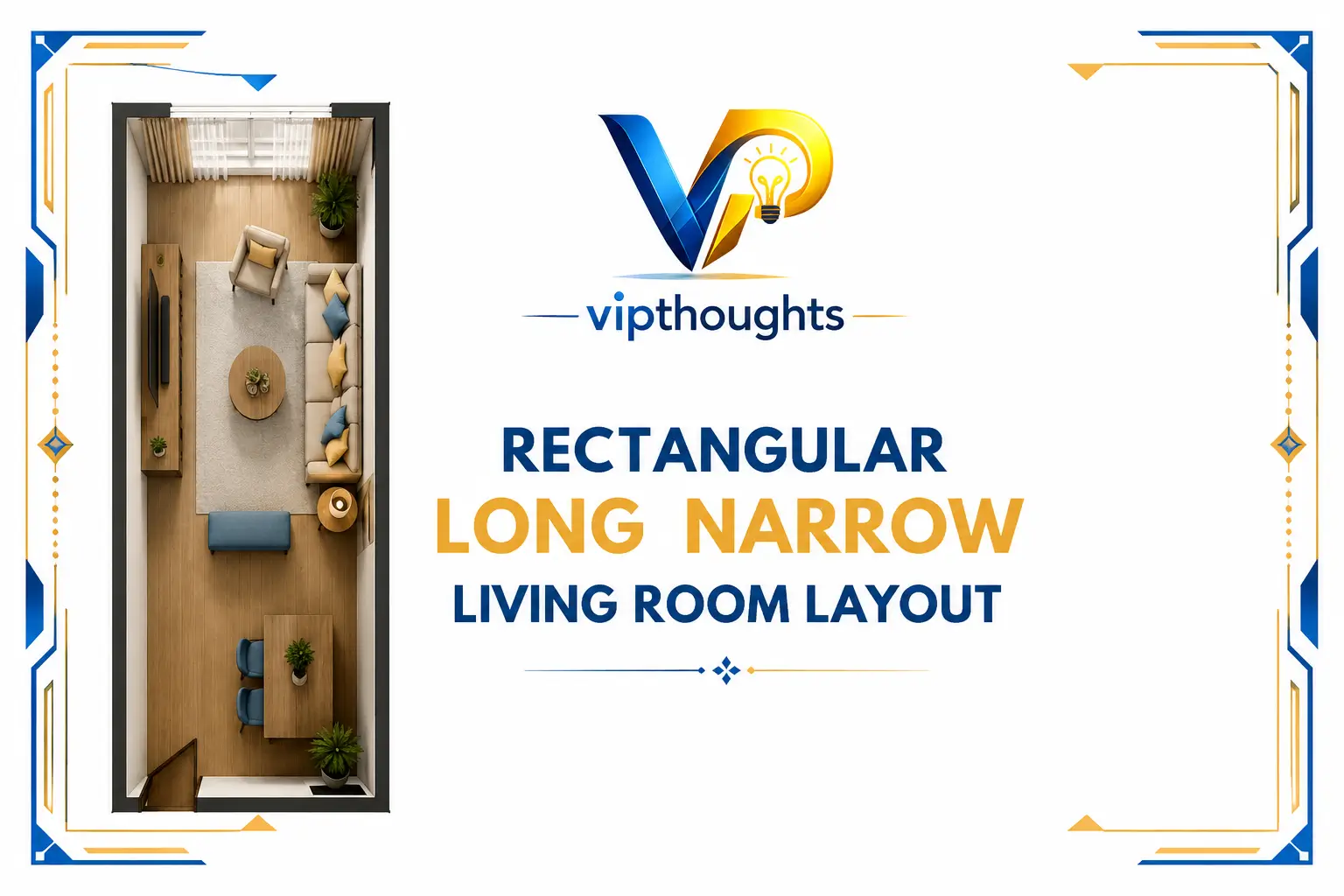
Introduction: Why Long, Narrow Living Rooms Need Smart Design
A long, narrow living room is one of the most common layouts in modern homes, especially in apartments and urban houses in the USA, UK, and Canada. While these spaces are practical, they can be challenging to design due to their stretched shape and limited width.
Most homeowners struggle with questions like: Where should the sofa go? How do I place the TV? Why does my room feel like a hallway instead of a cozy living space?
The truth is, the issue is not the room size; it is the living room layout strategy. Without proper planning, even a large room can feel uncomfortable. But with the right approach, even a narrow space can look stylish, functional, and spacious.
In this guide from VIP Thoughts, you will learn practical layout designs, furniture placement strategies, and expert interior design tips to transform a long, narrow room into a balanced, elegant living area.
What is a Living Room Layout?
A living room layout is the planned arrangement of furniture, decor, and movement space inside a living area. It defines how people move, sit, interact, and enjoy the room.
A good layout ensures:
- Smooth walking space
- Balanced furniture placement
- Clear focal point (TV or feature wall)
- Comfortable seating arrangement
- Visual harmony in the room
In simple words, a living room layout is the “map” of your space. Without it, furniture placement becomes random and inefficient.
Quick Summary
- Long, narrow rooms need zoning and balance
- Avoid pushing all furniture against the walls
- Create walking paths for better flow
- Use rugs and lighting to divide space
- Choose a clear focal point
- Keep the layout simple and functional
Understanding the Challenges of Narrow Living Rooms
Before designing a solution, it’s important to understand why these rooms feel difficult to arrange. Common Problems in Long, Narrow Rooms:
Hallway Effect
When furniture is placed on both walls, the room feels like a corridor instead of a living space. This is one of the biggest mistakes in living room layout planning.
Poor Furniture Proportion
Using oversized furniture in a narrow room makes the space feel even smaller. On the other hand, very small furniture creates an imbalance.
Lack of Visual Balance
If one side of the room feels heavier than the other, the layout looks awkward and unfinished.
Blocked Movement Paths
Poor planning often blocks walking routes, making the space uncomfortable to use.
Best Rectangular Long Narrow Living Room Layout Ideas
Now let’s explore practical, real-world layout designs that actually work.
Layout 1 – Floating Furniture Layout (Most Effective)
What it is
Instead of pushing furniture against walls, you “float” the seating area in the center of the room.
How it works
- Sofa placed slightly away from the wall
- The coffee table is centered in front
- Chairs placed opposite or beside the sofa
- TV mounted on one end wall
Why it works
This living room layout breaks the hallway effect and creates a cozy seating zone in the middle.
Example
In a 20-foot-long room:
- Sofa placed in the center area
- 2 feet of walking space behind the sofa
- TV mounted on a short wall
This instantly makes the room feel structured and modern.
Layout 2 – Zoned Living Room Design
What it means
You divide the room into different functional areas instead of treating it as one long space.
Common zones
- Seating zone
- Reading corner
- Entertainment zone
How to arrange
- Sofa + coffee table = main seating
- Armchair + lamp = reading area
- TV unit = entertainment focus
Why it works
This living room layout reduces the tunnel effect and makes the room more functional.
Real example
A family room can have:
- Sofa at the center
- Small desk or reading chair near the window
- TV on the opposite wall
Each zone serves a purpose.
Layout 3 – Symmetrical Design Layout
What it is
A balanced layout where both sides of the room visually mirror each other.
Setup
- Sofa placed in the center
- Two identical chairs on both sides
- Coffee table in the middle
- TV centered on the opposite wall
Best for
- Formal living rooms
- Minimalist homes
- Luxury interiors
Why it works
Symmetry creates calmness and order in a living room layout, especially in narrow spaces.
Layout 4 – L-Shaped Seating Layout
What it is
Furniture is arranged in an L-shape to use the corner space efficiently.
How to design
- Sofa along the long wall
- Loveseat or chairs along the adjacent wall
- Coffee table in the center
Benefits
- Improves seating capacity
- Opens a walking path
- Makes the room feel wider
This is one of the most popular living room layout styles in apartments.
H2: Layout 5 – TV-Centered Layout
What it is
TV becomes the main focal point of the room.
Arrangement
- TV mounted on a short wall
- Sofa directly facing the TV
- Additional chairs were placed at the sides
Why it works
It creates a clear direction and eliminates confusion in the living room layout.
Best for
- Entertainment-focused homes
- Family movie rooms
How to Visually Expand a Narrow Living Room
Even without changing the structure, you can make the room feel bigger.
Use Light Colors
Light shades like white, beige, and soft grey reflect light and open up space. A well-planned living room layout always starts with color psychology.
Add Mirrors
Mirrors reflect light and create the illusion of width. Placing a mirror on a long wall can instantly expand visual space.
Use Rugs to Define Zones
Rugs help break the long shape of the room and create structured areas in your living room layout.
Use Vertical Elements
Tall shelves, wall art, and floor lamps draw the eye upward, balancing the narrow shape.
Step-by-Step Furniture Placement Guide
Designing a perfect living room layout is not just about placing furniture randomly. It is about following a smart sequence so every item supports comfort, movement, and visual balance. Below is a detailed step-by-step guide that explains how professionals actually plan a room.
Step 1: Identify the Focal Point
Before placing anything, you must decide where the eye will naturally focus when someone enters the room. This is called the focal point, and it is the foundation of your entire living room layout.
What can be a focal point?
- TV wall (most common in modern homes)
- Fireplace (traditional homes)
- Feature wall (decor, art, or texture)
- Large window with outdoor view
Why is this step important
If you skip this step, your furniture will feel directionless. A clear focal point helps you decide where everything else should go.
Simple example
If your TV is on the main wall, then your sofa and seating must naturally face it. This creates a balanced and functional living room layout where everything feels connected.
Step 2: Place the Largest Furniture First
The next step is to position the biggest item in the room, usually the sofa. This is the anchor of your entire design.
Why start with the sofa?
Because it takes the most space and defines how the rest of the room will function. Once the sofa is placed correctly, the remaining layout becomes easier.
Best placement options
- Center of the room (floating style)
- Against the longest wall (for tight spaces)
- Facing the focal point directly
Important tip
Do not force the sofa into corners just to save space. A well-planned living room layout always prioritizes comfort and flow over squeezing furniture.
Step 3: Add Secondary Seating
After placing the sofa, you need to add extra seating to make the room functional and flexible.
What counts as secondary seating?
- Armchairs
- Accent chairs
- Benches
- Ottomans or stools
How to place them correctly
- Opposite the sofa for conversation
- Diagonal corners for balance
- Near windows for reading corners
Why this matters
Secondary seating improves usability and makes your living room layout feel more welcoming and social. It prevents the room from feeling like a single straight line of furniture.
Step 4: Ensure Walking Space (Very Important)
One of the most ignored parts of interior design is movement space. Without proper walking paths, even a beautiful room becomes uncomfortable.
Recommended spacing
Keep at least 2 to 3 feet of clearance between furniture pieces and walkways.
Why is it important
- Prevents a cluttered feeling
- Makes daily movement easy
- Improves safety and comfort
- Gives the room a more open feel
Example mistake
If a coffee table is too close to the sofa, people will constantly feel restricted. This breaks the flow of a good living room layout.
Step 5: Add Decor Layers
Once the main furniture is placed, you can now focus on decoration. This step brings personality and warmth to the room.
What to include
- Rugs to define seating areas
- Lamps for soft lighting
- Coffee tables for functionality
- Wall art or mirrors for style
Why does this step come last
Decor should enhance the layout, not define it. If you add decor first, you might overcrowd the space or lose balance.
Example
A rug under the sofa and table instantly creates a “zone,” making your living room layout feel structured and professionally designed.
Common Mistakes to Avoid
Even a good space can look wrong if these mistakes are made. Understanding them helps you avoid design failure and create a more functional room.
Pushing Everything Against Walls
This is the most common mistake in narrow or rectangular rooms.
Why do people do it
Most homeowners think pushing furniture against the walls creates more open space in the middle.
What actually happens
- The room starts looking like a corridor
- Seating feels disconnected
- Empty center space looks unused, not stylish
- The conversation area feels too far apart
Better approach
Instead of pushing everything to the edges, float your furniture slightly inward. This creates a cozy seating zone and improves your living room layout instantly.
Overcrowding the Room
Many people believe that more furniture equals better design. In reality, it has the opposite effect.
What goes wrong
- Space feels tight and messy
- No visual breathing room
- Furniture loses focus
- The room becomes stressful to use
Why it matters
A good living room layout uses balance, not quantity. Space is not wasted; it is part of the design.
Better solution
Use fewer but well-placed pieces. Every item should have a purpose, either functional or decorative.
Ignoring Proportions
Proportion means matching furniture size with room size.
Common mistakes
- Oversized sofas in narrow rooms
- Tiny chairs in large spaces
- Heavy furniture is blocking movement
What happens
When proportions are wrong:
- The room feels unbalanced
- Movement becomes difficult
- Visual harmony is lost
Better approach
Choose slim, space-efficient furniture. A well-planned living room layout always respects room scale.
Poor Lighting Design
Lighting is often treated as an afterthought, but it plays a major role in how a room feels.
What goes wrong
- Dark corners make the room feel smaller
- Flat lighting removes depth
- No mood or atmosphere
Why it matters
Even a perfect living room layout looks incomplete without proper lighting.
Better solution
Use layered lighting:
- Ceiling lights for general brightness
- Floor lamps for corners
- Table lamps for warmth
This adds depth and makes the room feel larger and more inviting.
No Clear Plan Before Placement
One of the biggest mistakes is starting without planning.
What happens
- Furniture is moved multiple times
- Space feels inconsistent
- Final result looks random
Why is it a problem
Without a plan, your living room layout becomes trial and error instead of a structured design.
Better approach
Always:
- Sketch the layout first
- Measure your space
- Decide focal point
- Plan furniture placement before moving anything
This saves time and avoids costly mistakes.
Pro Interior Designer Tips
- Always sketch your layout before buying furniture
- Use multi-purpose furniture (storage ottomans, sofa beds)
- Keep the color palette consistent
- Create at least one focal wall
- Balance both sides visually
These professional tips can instantly upgrade your living room layout.
Conclusion
Designing a long, narrow room is not about limitations; it is about strategy. A well-planned living room layout can completely transform how a space feels, functions, and looks.
By using zoning, floating furniture, symmetry, and smart spacing, you can turn even the most challenging room into a stylish and comfortable living area.
Frequently Asked Questions
What is the best layout for a narrow living room?
The best layout is a floating or zoned design that avoids pushing furniture against walls. A well-planned living room layout improves flow, balance, and comfort in long spaces.
How do I make a long living room feel wider?
Use light colors, rugs, mirrors, and vertical design elements. A smart living room layout creates visual expansion through spacing and lighting.
Where should I place the sofa in a narrow room?
Place it centrally or slightly floating instead of against the wall. This improves balance and makes the living room layout look more modern.
How do I divide a long living room into sections?
Use furniture placement, rugs, and lighting to create zones. A zoned living room layout improves both function and aesthetics.