

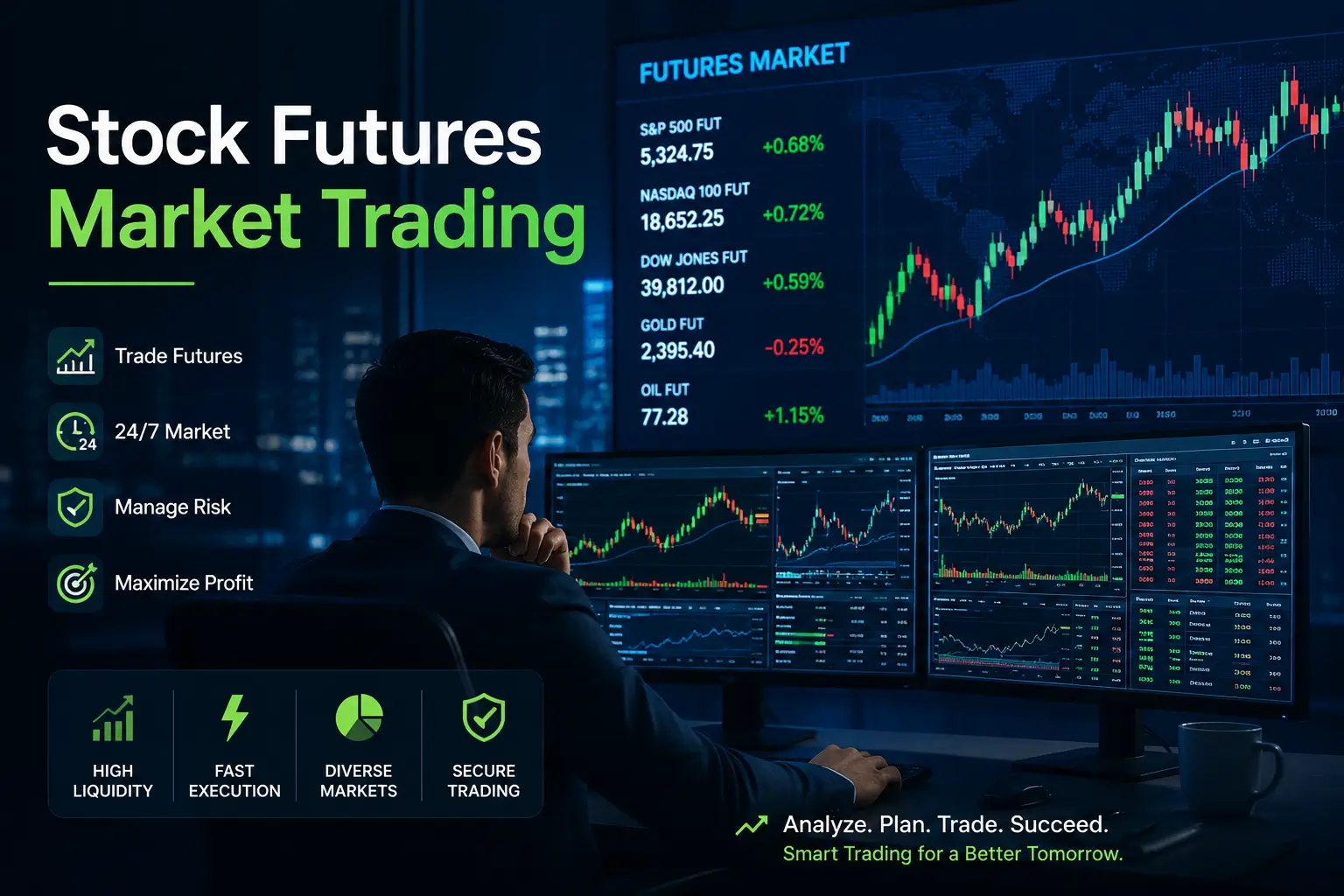
Introduction: Why Stock Futures Matter for Beginners
Many beginners in the USA stock market feel confused when they hear the term Stock Futures. It sounds complex, technical, and something only professional traders use. This confusion often stops new investors from exploring an important part of the financial market.
In reality, Stock Futures are not as complicated as they seem. They are simply agreements to buy or sell a stock at a fixed price in the future. These contracts are widely used by traders for hedging risk and speculating on price movements.
In this VIP Thoughts guide, we will break everything down step-by-step in very simple language. You will learn what they are, how they work, why traders use them, and how beginners can understand them without stress.
What Are Stock Futures?
They are financial contracts where two parties agree to buy or sell a stock at a specific price on a future date. Instead of buying the stock instantly, you are locking in a price today for a transaction that will happen later.
In simple terms, it agrees to trade a stock in the future at today’s decided price.
For example, if Apple stock is $180 today, you might agree in a futures contract to buy it at $185 after one month. If Apple goes higher than $185, you benefit. If it goes lower, you lose.
This makes its a prediction-based trading tool rather than direct ownership of shares.
Quick Understanding
They are contracts to buy or sell stocks at a fixed future price. They are used for trading and risk protection. Profits and losses depend on market movement, making them powerful but risky for beginners.
How Stock Futures Work in Real Trading
To understand properly, you must understand how the process works in real markets.
When you trade:
- You select a stock (like Tesla, Apple, or Amazon)
- You choose a contract with a fixed price
- You select an expiry date (weekly, monthly, or quarterly)
- You enter the agreement with margin money
Now your profit or loss depends on the future price of that stock.
For example, if you buy a Tesla futures contract at $250 expecting it to rise, and it reaches $270, you make a profit. But if it falls to $230, you lose money.
Unlike normal stock buying, you are not owning shares immediately. You are trading the price direction.
Why Investors Use Stock Futures
Investors and traders use for three main reasons:
Hedging (Risk Protection)
Big investors use futures to protect their investments. If they already own stocks and the market drops, futures can help reduce losses. This is like insurance for their portfolio.
Speculation (Profit Making)
Traders try to predict whether a stock will go up or down. If their prediction is correct, they make quick profits.
Leverage Trading
They allow traders to control large positions with a small amount of money. This increases profit potential but also increases risk.
Real Example from the US Market
Let’s take a simple real-world example:
A trader believes Microsoft stock will rise next month.
- Current price: $350
- Futures contract price: $355
- After 30 days: price rises to $370
The trader earns profit because the market moved above the contract price.
Now imagine the opposite:
- If Microsoft falls to $340, the trader loses money.
This example shows how its depend on market prediction, not ownership.
Stock Futures vs Regular Stock Buying
Understanding the difference between stocks and futures is very important for beginners.
| Feature | Stock Futures | Regular Stocks |
| Ownership | No ownership | You own shares |
| Timing | Future agreement | Instant purchase |
| Risk Level | High | Medium |
| Leverage | Available | Not available |
| Purpose | Trading & speculation | Long-term investing |
Regular stocks are safer for beginners, while Stock Futures are more advanced and fast-moving.
Key Terms You Must Understand
Before trading, you must know these basic terms:
Contract Size
This is the number of shares included in one futures contract. It is fixed by the exchange.
Expiry Date
This is the last date of the contract when it must be settled.
Margin
This is the small deposit required to open a futures trade.
Leverage
Leverage allows you to control large trades with small money, increasing both profit and loss.
Settlement
This is the final closing of the contract where profit or loss is calculated.
These terms are the foundation of futures trading.
Advantages of Stock Futures
They offer several benefits that attract traders:
High Profit Potential
Small price movements can generate large profits due to leverage.
Portfolio Protection
Investors can protect their holdings from market crashes.
Lower Entry Cost
You do not need full stock value to trade futures.
Flexible Strategies
Traders can profit in both rising and falling markets.
These advantages make futures attractive for active traders.
Risks of Stock Futures
Even though they are powerful, they come with serious risks:
High Loss Potential
Because of leverage, even small losses can become large quickly.
Market Volatility
Prices can change rapidly, making trades unpredictable.
Complexity for Beginners
Without knowledge, beginners can make costly mistakes.
Emotional Pressure
Fast price changes can lead to panic decisions.
This is why experts always recommend learning before investing real money.
Who Should Trade Stock Futures?
They are not suitable for everyone.
Suitable for:
- Experienced traders
- Market analysts
- Active investors
- Risk-tolerant individuals
Not suitable for:
- Beginners with no knowledge
- Long-term passive investors
- People afraid of financial risk
If you are new, it is better to learn stocks first before moving to futures.
Step-by-Step Guide to Start Trading Stock
Step 1: Learn Basics of Stock Market
Understand how stocks, indices, and trading work before moving to futures.
Step 2: Open a Trading Account
Choose a regulated broker in the US that supports futures trading.
Step 3: Practice with Demo Account
Use virtual money to learn without risk.
Step 4: Learn Technical Analysis
Study charts, trends, and price movements.
Step 5: Start with Small Trades
Begin with low capital to manage risk safely.
This step-by-step approach helps beginners avoid early losses.
Common Mistakes Beginners Make
Many beginners lose money because they:
- Use too much leverage
- Trade without strategy
- Follow random social media tips
- Ignore stop-loss rules
- Let emotions control decisions
Avoiding these mistakes is more important than finding perfect trades.
Stock Futures in Today’s Market
Today, they are widely used in global financial markets, especially in the USA. Large institutions, hedge funds, and professional traders use them daily to manage risk and predict market direction.
Retail traders are also entering futures markets due to online platforms, but competition is strong and requires proper learning.
FAQs About Stock Futures
What are Stock Futures in simple words?
They are contracts where you agree to buy or sell a stock at a fixed price on a future date. They are used for trading and hedging based on price movement.
They help traders speculate on market direction without owning the actual stock.
Are Stock Futures risky for beginners?
Yes, they are risky for beginners because they use leverage and move very fast. Small price changes can lead to big profits or losses, so proper learning is essential.
Beginners should always practice first before using real money.
How much money do I need for Futures trading?
The required amount depends on the broker and contract size, but many traders start with a few hundred to a few thousand dollars. Starting small is strongly recommended.
This helps reduce risk while learning market behavior.
Can I make daily profit from Stock Futures?
Yes, it is possible to make daily profit, but it is not guaranteed. Success depends on strategy, experience, and discipline in risk management.
Most beginners take time to become consistently profitable.
What is the difference between stocks and Stock Futures?
Stocks represent ownership in a company, while they are contracts based on future price movement. Futures are more complex and risky due to leverage.
Stocks are better for beginners, while futures are for advanced traders.