

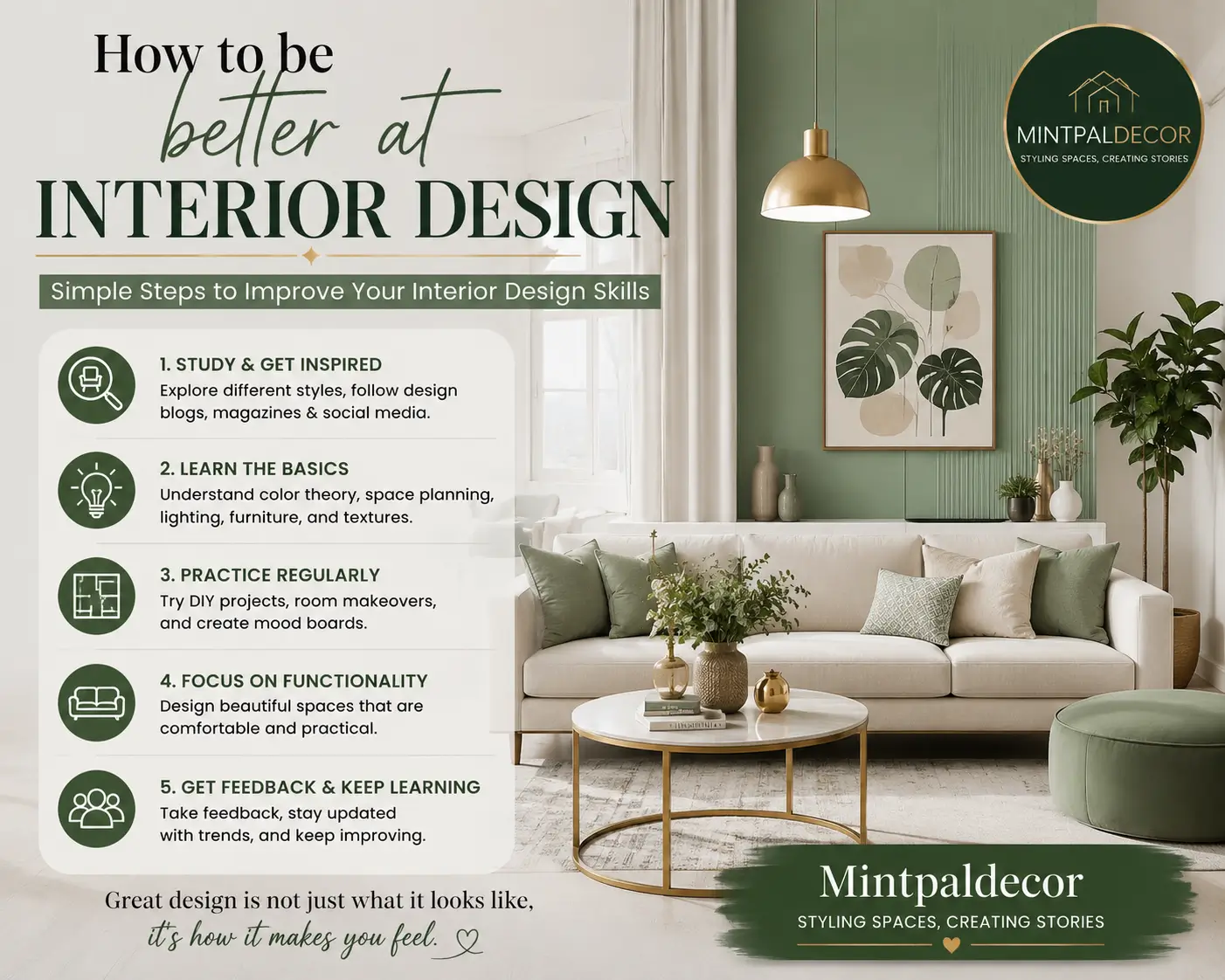
Introduction: Why Interior Design Skills Matter More Than You Think
Your home is not just a place to live it directly affects your mood, focus, and daily comfort. A poorly arranged room can feel stressful, while a well-planned space can feel calm and organized even if it is small or simple.
This is where interior design becomes important. It is not only about decorating rooms or buying expensive furniture. It is about understanding how space, light, color, and objects work together.
Most people think good design is something only professionals can do, but that is not true. With the right understanding, anyone can improve their home step by step.
In this guide by VIP Thoughts, you will learn practical, real-world methods to improve your design skills. These are not theoretical ideas they are techniques you can apply immediately in your home.
You will learn how to think, observe, and arrange spaces like a designer without needing formal training.
What is Interior Design?
It is the process of planning and arranging indoor spaces to make them functional, comfortable, and visually balanced. It includes choosing furniture, colors, lighting, textures, and layout in a way that improves how a space looks and feels. Good design focuses on both beauty and practicality so people can live comfortably in the space.
Quick Summary
- It is about function + beauty together
- Space planning is more important than decoration
- Lighting and layout decide most of the room’s look
- Simple colors always work better than complex ones
- You can improve design skills with observation and practice
Understanding Your Space Before Anything Else
Most beginners make the mistake of buying furniture first and thinking later. But professional design always starts with understanding space.
Every room has its own limits and strengths:
- Some rooms are wide but short
- Some are narrow but long
- Some have strong natural light
- Some are dark and need artificial lighting support
Why this matters
If you don’t understand your space, even expensive furniture will look wrong. For example, a large sectional sofa in a small living room can block movement and make the space feel even smaller.
Practical example
In a small US apartment bedroom, placing the bed diagonally may look stylish online, but in real life it reduces walking space. Instead, placing the bed against the longest wall creates better flow and balance.
Key takeaway
Good designers always “read” the room first before making any changes
Layout Planning: The Backbone of Interior Design
A layout is the way furniture is arranged in a room. It decides how people move, sit, and interact in the space.
In this, layout is more important than decoration because even beautiful items look bad in a poor arrangement.
What a good layout should do:
- Create easy movement paths
- Keep the room balanced visually
- Highlight one main focus point
- Avoid empty or overcrowded corners
Simple method to improve layout thinking:
Draw your room on paper or use a free online room planner. Place furniture shapes and test different positions before moving anything physically.
Example:
A living room with a TV should always have seating oriented toward it. If sofas are placed randomly, the room feels disconnected and uncomfortable.
Pro insight:
Designers often say: “If the layout is wrong, nothing else can fix the room.”
Lighting: The Most Underrated Design Tool
Lighting is one of the most powerful parts of design, yet many people ignore it.
Lighting changes:
- Mood of the room
- Perceived size of the space
- Color appearance
- Overall comfort level
Three types of lighting are explained:
1. Natural light:
Sunlight from windows. It makes spaces feel open and fresh.
2. Ambient light:
General room lighting like ceiling lights or lamps. It sets the base brightness.
3. Task light:
Focused lighting for reading, cooking, or working.
Real example:
A dull living room in a UK home can look completely different by:
- Adding warm LED bulbs
- Using a floor lamp in a dark corner
- Placing mirrors near windows
This combination increases brightness and makes the room feel larger.
Key takeaway:
Lighting is not decoration it is structure.
Color Selection: Keep It Simple but Smart
Color is emotional. It affects how a room feels instantly.
Many beginners try to use too many colors, which creates confusion and visual stress.
Professional rule in interior design:
Use the 60-30-10 rule:
- 60% main color (walls, large furniture)
- 30% secondary color (curtains, rugs)
- 10% accent color (decor items)
Example palette:
- White (base)
- Soft grey (secondary)
- Navy blue (accent)
Why this works:
It keeps the room visually clean while still adding personality.
Common mistake:
Using bright colors everywhere. This makes the space feel smaller and chaotic.
Decluttering: The Secret to Modern Design
Clutter is the biggest enemy of good interior design.
Even a well-furnished room looks bad if it is full of unnecessary items.
Why decluttering matters:
- Makes rooms feel larger
- Improves focus and relaxation
- Highlights important furniture
- Reduces visual noise
Practical example:
A coffee table covered with books, remotes, and decor items looks messy. But when only one or two items are placed neatly, it looks modern and intentional.
Simple rule:
If you don’t use it or love it, remove it.
Mixing Textures for Depth and Style
Texture is how a surface feels visually even if you cannot touch it.
A room with only smooth surfaces feels flat. Mixing textures adds depth.
Common texture types:
- Wood (warm and natural)
- Metal (modern and clean)
- Fabric (soft and comfortable)
- Glass (light and open)
Example:
A sofa with soft fabric, paired with a wooden table and metal lamp, creates a balanced modern look.
Why this is important:
Professional interior design always uses contrast to create interest.
Creating a Strong Focal Point
Every room needs a visual anchor.
Without a focal point, the room feels confusing.
Common focal points:
- TV wall
- Artwork
- Bed headboard
- Large window view
Example:
In a bedroom, the bed should always be the main focus. Everything else side tables, lamps, decor should support it.
Pro tip:
Don’t create multiple “attention centers.” One strong focal point is enough.
Scale and Proportion: Getting Sizes Right
Scale means how big or small something is compared to the room.
Common mistake:
- Big sofa in small room
- Small rug in large living room
Why it matters:
Incorrect scale makes rooms feel uncomfortable even if everything else is good.
Simple solution:
Always measure your space before buying furniture.
This is a basic rule in professional interior design that beginners often ignore.
Personal Style Without Overdoing It
Your home should feel personal, but not crowded.
Good personal touches:
- Family photos in small frames
- Indoor plants
- Simple artwork
- Books on shelves
Mistake to avoid:
Adding too many decorative items in every corner.
Balanced approach:
Choose a few meaningful items and give them space to stand out.
Learn from Real-Life Spaces (Fastest Method)
One of the fastest ways to improve your interior design skills is observation.
Look at:
- Pinterest home ideas
- Real estate listings
- Model homes
- Interior design blogs
What to observe:
- How furniture is placed
- How colors are balanced
- How lighting is used
- How space feels open or closed
At VIP Thoughts, we recommend learning the “why” behind design choices instead of copying blindly.
Common Interior Design Mistakes
- Buying furniture before planning layout
- Ignoring lighting setup
- Overusing decorative items
- Using too many colors
- Choosing style over function
Avoiding these alone can improve your home dramatically.
Frequently Asked Questions
How can I improve interior design skills at home?
You can improve by practicing small changes like rearranging furniture, adjusting lighting, and experimenting with color balance. Real-life practice builds better understanding than theory.
Do I need expensive items for good interior design?
No, expensive items are not necessary. A well-planned layout, good lighting, and simple colors can make even budget furniture look stylish and modern.
What is the most important rule in interior design?
Balance is the most important rule. A room should feel visually even, comfortable, and easy to move through without overcrowding or emptiness.
How do I choose colors for my room?
Start with neutral colors and add one or two accent shades. This keeps the room simple, modern, and visually comfortable.
Can I learn interior design without a degree?
Yes, many successful designers are self-taught. Practice, observation, and learning from real spaces are enough to build strong skills over time.
Conclusion
Improving your home design is a gradual process. Start with small changes, observe what works, and slowly build your confidence. For more practical home improvement guides, explore VIP Thoughts for simple, real-world design advice.